
Defibering and refining non-wood raw materials with ATREX
5.5.2026
Herbaceous plants are non-woody species characterized by soft, green stems and rapid growth. They are distinct from woody plants such as trees and shrubs, and their life cycle is typically one or two years, with some exceptions. This group includes a wide range of species, many of which are cultivated for food but also offer significant potential as sources of fibers. They can be classified according to the location in the plant from which the fibers originate. That also determines the other cell types that are accompanied by the fibers.
This paper was authored by Dr. Elias Retulainen.
“Atrex gives us a new way to work with fiber raw materials, making it possible to achieve property combinations we simply couldn’t reach before.”
Table 1: Herbaceous plants classified according to the origin of fibers:
Grass-type fibers (jointed stalks): sugarcane (bagasse), sorghum, bamboo, wheat, reed, oil palm, maize
Leaf fibers (obtained from leaf veins): sisal, abaca (so-called hard fibers, contain a high amount of lignin), pineapple, banana, curaua, date palm
Bast fibers (obtained from the inner bark or phloem): flax, hemp, kenaf, jute, ramie
Seed fibers: cotton, kapok
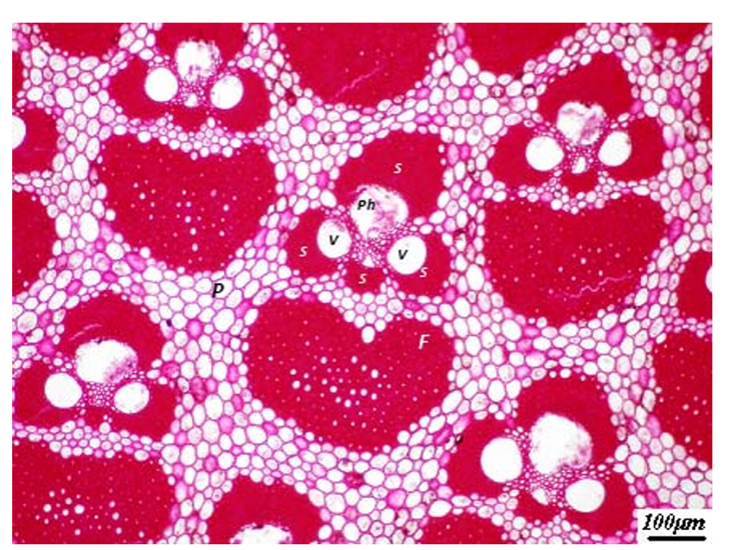
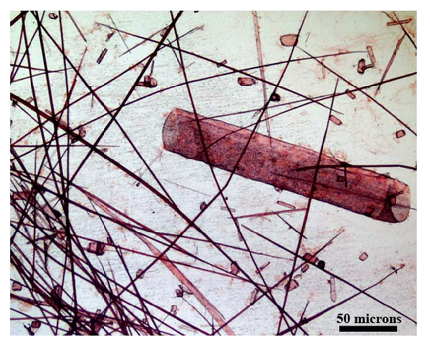
Figure 1 Microscope images of bamboo. Left: Cross section of bamboo (F and S denote fibers, P parenchyma cells and V vessel cells ). Right: bamboo fibers and a large vessel cell after maceration (Nitisoravut et al. 2010).
Utilization Potential
Many herbaceous plants – such as wheat, maize, rice, and sorghum – are primarily cultivated for the food industry, yet their by-product – the straw – usually remains underutilized as fiber source. In contrast, crops like flax and hemp are grown specifically for their fibrous stems, which serve as a valuable raw material for textiles, bank note paper, and various industrial uses.
“Non-wood fibers represent a highly promising yet underutilized source of cellulose and cellulosic fibers. Unlocking their full potential calls for simple, robust, energy efficient and scalable approaches.”
Sugarcane, cultivated mainly for sugar production, yields bagasse as a fiber-rich by-product after juice extraction, commonly used in paper, board, and composite manufacturing. Bamboo, a perennial and exceptionally fast-growing grass, offers robust material for construction, furniture, textiles, and papermaking, while its shoots can also be consumed as food by both humans and animals.
Trends Supporting Increased Utilization Non-wood fibers
The use of herbaceous plants for fibers is supported by several global trends:
Plastic replacement: Plant fibers offer a sustainable alternative to plastics, especially in packaging and composites. This strong tendency continues.
Solution to limited cellulose and fiber resources: As wood-based fibers become scarcer at certain areas. Herbaceous plants are an abundant, low cost alternative.
Reduced chemical use: Mechanical refining methods can be used with these plants, minimizing the need for harsh chemical treatment and subsequent recovery.
High production of biomass and cellulose: Many herbaceous crops show high biomass production per hectare, and the total global cultivation area is huge (Table 2).
Table 2: Selected Herbaceous Plants; Cultivated Area, Production, and Average Fiber Length

Mechanical Defibration and Refining of Fibers from Non-wood plants
Mechanical treatments involve physically separating fibers from plant material through mechanical defibration, grinding and refining, possibly with the help of thermal energy. Mechanical processing, unlike chemical defibration, tends to minimize issues associated with the inorganic substances such as silica. For example, sugarcane bagasse can be mechanically or chemically processed to yield strong fibers for paper and composites. Flax and hemp stems can be comminuted and defibrated to obtain long, strong fibers. The main advantage of mechanical defibration and refining is its environmental friendliness, as it requires very little or no chemicals and helps preserve the natural properties of the fibers without causing expensive recovery costs of chemicals. Atrex offers high potential for tailoring the mechanical treatment for each raw material type.
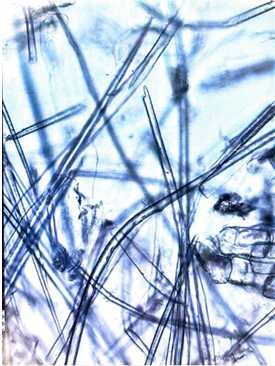
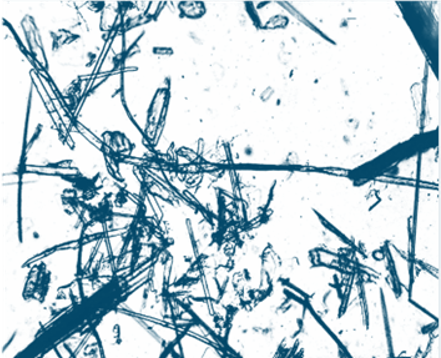
Figure 2 Bagasse fibers (left) and pith (right) after heat treatment and mechanical defibering process using Atrex (Ollinen 2015).
Utilisation of Atrex technology with non-wood raw materials
Atrex is a refining technology particularly suitable for gentle mechanical defibration and refining of fibers at a wide range of consistencies. The defibering process can be boosted by using elevated temperatures. A gentle process is important for herbaceous plants, as their fibers are typically shorter and more delicate than those from softwoods. Gentle refining preserves fiber length and strength, essential for final product quality.
“The expanding landscape of cellulosic fiber applications is redefining material requirements, creating exciting challenges and opportunities well beyond traditional papermaking,” says Retulainen. “What’s really exciting is that the new applications for cellulosic fibers ask for completely different things than traditional papermaking ever did. One of the exciting things is that these new applications don’t always need the complexity of papermaking—sometimes the fiber requirements are much more straightforward.”
What are the reasons behind the gentle process and the gentle treatment, which preserves fiber integrity and enables better retention of fiber length? A high number of low‑energy mechanical impacts allows effective fiber development without the excessive forces that would otherwise cause fiber breakage. The predominant mechanism is not fiber material crushing between the rotors; instead, the process is mainly driven by hydrodynamic shear forces and turbulence. Compared with typical low‑consistency refiners, there is significantly less direct compression of fiber bundles between shearing surfaces.
By increasing the consistency of the material suspension and the rotor speed, the nature of the treatment can be adjusted. A gentle treatment using open, disperser‑type rotors generally requires several passes through the Atrex device. However, rotor design and rotational speed have a major influence on the treatment outcome. For example, a single pass through a high‑speed Atrex device equipped with more closed rotors can fibrillate chemical bamboo pulp fibers and produce highly refined, high‑SR, micro‑fibrillated pulp (Fig. 3).
“Atrex gives us a new way to work with fiber raw materials, making it possible to achieve property combinations we simply couldn’t reach before.”
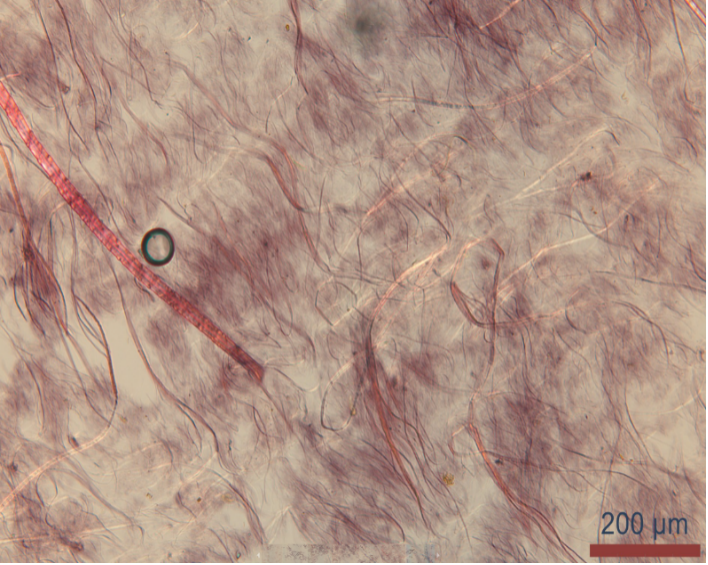
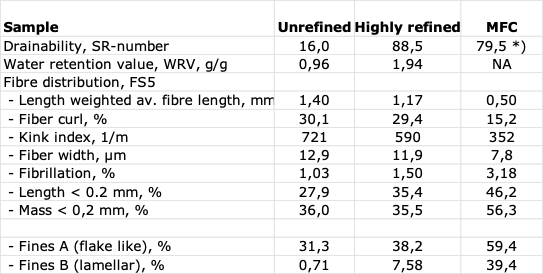
Figure 3 MFC from Atrex-refined chemical bamboo pulp and measured fiber properties (Microscope image, courtesy of KCL).
The defibration process can be made more efficient by operating at elevated temperatures. In addition to cellulose and hemicelluloses, most non‑wood raw materials contain a considerable amount of lignin and smaller amounts of pectins, both of which play a major role in the properties of the middle lamella that binds the fibers together in the plant stalk. Although all carbohydrate polymers present in non‑wood raw materials are softened by water and heat, lignin benefits most strongly from elevated temperatures. Softened lignin increases the flexibility and conformability of the material and weakens the bonding between fibers, making it possible to separate the fibers more intact, with less damage and fewer fines. This has a positive effect on both the network strength and the drainage properties of the resulting pulp.
Non‑wood raw materials can also be pre‑treated for longer periods at elevated temperatures in a pre‑reactor (Fig 4). Depending on the duration of the heat treatment, different reactions may occur. Under most conditions, elevated temperatures initiate the hydrolysis of pectins and hemicelluloses. Hydrolysis releases acidic groups, lowers the pH, and makes the process more acidic, which in turn further accelerates the hydrolysis. Since pectins, together with lignin, are essential components of the middle lamella, their hydrolysis contributes significantly to easier fiber separation.
The pre‑treatment process can be made even more efficient by adding chemicals or enzymes to the reactor. A straightforward and simple approach is the addition of mild acidic or alkaline chemicals, although more aggressive chemical treatments are also possible. Such processes require more precise control of residence time, temperature and other reactor conditions. A potential drawback is an increased amount of dissolved material, which results in lower overall yield.
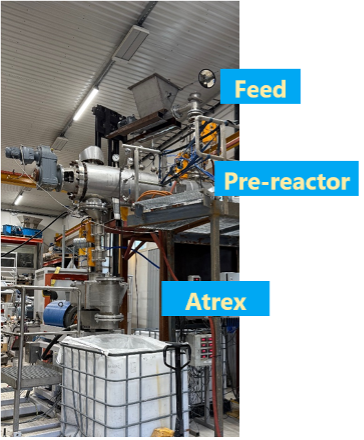
Figure 4 Atrex device connected to a pre-treatment stage in a single-screw reactor.
Material Quality and Application Areas of Non-wood Materials
The quality of fibers obtained from herbaceous plants depends on the species, growing conditions, and processing method. Wheat and other grass fibers give rather short and narrow fibers while cotton and flax fibers can be exceptionally long, making them especially suitable for textiles. Although grass fibers, including sugarcane bagasse and bamboo fibers are shorter, they are well-suited for use in paper, board, and as reinforcement or fillers in composite materials. Selecting an appropriate mechanical refining method is essential for preserving fiber length and quality, which is particularly important for the more delicate fibers found in herbaceous plants. Next we can look closer at some potential application areas of non-wood fibers.
Suitability of Non-wood Fibers for Paper and Board Products
Most fibers derived from herbaceous plants are well-suited for use in paper and board manufacturing. Fig 5 shows that non-wood fibers can give paper reasonable tensile strength after refining and even tear-tensile strength combinations that are similar or even better that those of hardwood pulps. Many cereal straws (such as wheat, rice, and barley), sugarcane bagasse, and even flax shives can be processed into pulp for various grades of paper and packaging board. These fibers typically have a shorter length compared to softwood fibers, but they can form papers with good formation and smoothness, making them ideal for printing and packaging applications. Additionally, the high annual yield and wide availability of herbaceous plants make them attractive raw material for biofiber based industries, especially in regions where wood resources are limited. Mechanical refining methods — especially gentle technologies like Atrex — help preserve fiber length and quality, further enhancing the performance of herbaceous fibers in paper and board products.
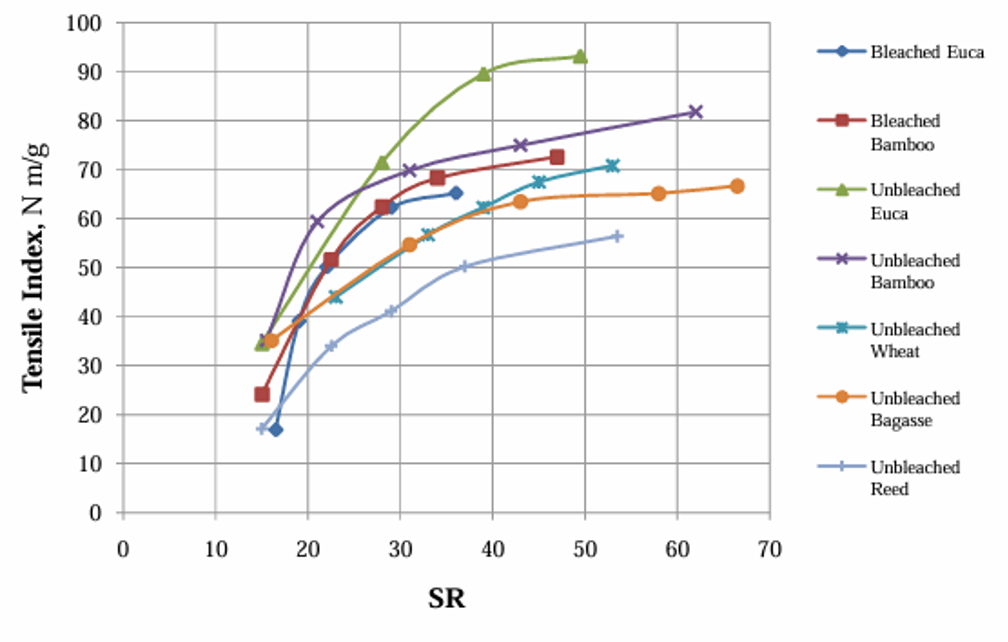
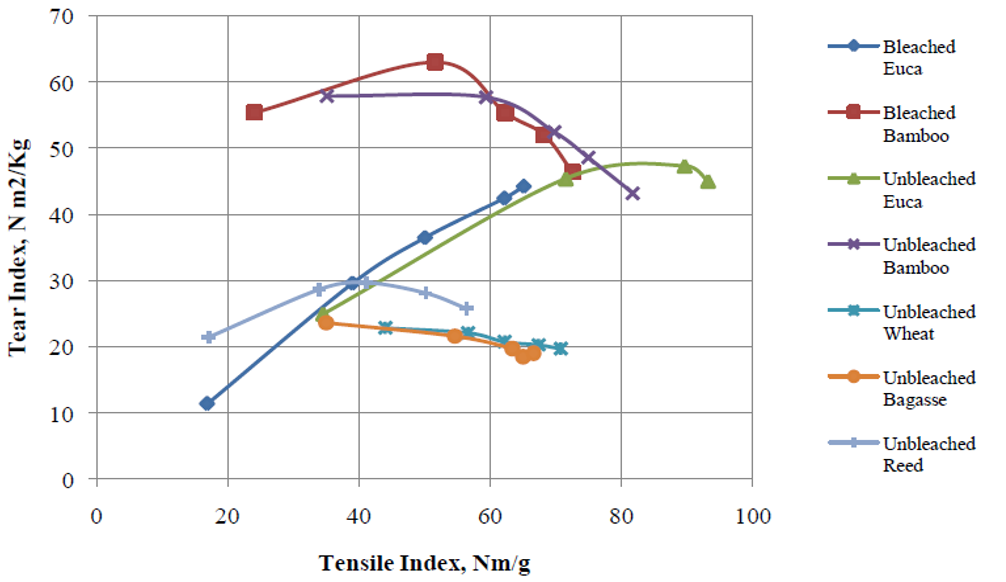
Figure 5 Strength property combinations of wheat, bamboo and bagasse chemical pulps compared to eucalyptus (Chen 2011).
Suitability for Composites:
Fibers from herbaceous are increasingly used as reinforcement in composite materials, replacing synthetic fibers in automotive parts, construction panels, and packaging. Their renewability, biodegradability, and good mechanical properties make them attractive for sustainable composite solutions.
Other Application Areas
Use for Textiles
In addition to hemp, flax, and cotton the non-wood fibers can be used for textile manufacturing, not only clothing but also geo- and agro textiles, ropes, mulch mats etc.
Absorbent and Hygiene Products
Non-wood fibers can be used to make porous structures with high porosity and capillarity. Such products include:
- Diaper and sanitary pad absorbent cores (fluff pulp alternatives)
- Medical absorbents and wound dressings
- Spill‑control sorbents (oil, chemicals)
- Cat litter and animal bedding
Acoustic Materials
Soft materials made from non-wood fibers have also noise damping properties. Typical applications are:
- Sound‑absorbing mats for buildings and vehicles
- Acoustic panels
- Underlayments for flooring
Thermal Insulation
Air is good insulator, therefore porous structures that have high porosity and low density have good thermal insulation properties. The fiber based structures can be made in three forms:
- loose-fill
- batt insulation
- rolled insulation mats
Micro- and Nanofibrillated Cellulose:
Herbaceous plant fibers are also suitable for the production of microfibrillated cellulose and nanofibrillated cellulose, and even production of cellulose nanocrystals. These advanced materials, produced by mechanical or combined mechanical-chemical treatments, have unique properties such as good strength, large surface area, and the ability to form films and gels. Micro- and nanofibrillated cellulose from herbaceous plants can be used in high-performance composites, barrier films, and as rheology modifiers in various industrial applications.
Challenges and Limitations in Utilizing Herbaceous Plant Fibers
Despite their many advantages, the use of herbaceous plant fibers also presents certain challenges. One major issue is the variability in fiber quality, which can depend greatly on plant species, growing conditions, harvesting and storing methods. Herbaceous fibers are often shorter and less uniform than wood fibers, which may affect the strength and durability of the final products. Additionally, the presence of non-fibrous components such as pith, waxes, and silica can complicate processing and require additional cleaning steps. Storage and transportation of bulky, low-density plant material can also be less efficient compared to wood. Finally, adapting existing industrial processes—originally designed for wood pulp—to handle herbaceous fibers may require technical modifications and investment. Overcoming these challenges is essential for the broader adoption of herbaceous plants as a sustainable fiber source.
Summary
Herbaceous plants present a wide array of possibilities as sources of biofibers, driven by global sustainability initiatives and innovations in mechanical refining. Advanced technologies such as Atrex facilitate gentle processing, which preserves fiber length and improves material quality for applications ranging from textiles to composites. The efficiency of Atrex-treatment process can be boosted by an pre-treatment stage, using heat or chemicals. The resulting fibers are highly suitable for cutting-edge uses, including composite reinforcement and the manufacture of micro- and nanofibrillated cellulose, further broadening their role in sustainable material solutions.
References
Chen, Cheng Cong, 2011, Papermaking potentials of some Chinese non-wood fibers: A Comparison. MSc thesis, Asian Institute of Technology, School of Environment, Resources and Development, Thailand. 2011
Nitisoravut N., Malinen R., and Kolmodin H., “Peer-reviewed: Relationship between fibre morphology and papermaking properties of selected Thai bamboo species.” Paperi Ja Puu/Paper & Timber 92.7 (2010): 34.
Ollinen Sasu, Ruohovartisten kasvien mekaaninen kuidutus (Mechanical defibration of herbaceous plants, in Finnish), BSc thesis 2015. Tampere University of Applied Sciences.
Let’s work together!
Want to learn more? Follow Megatrex on LinkedIn.


Grinding • Mixing • Dispersing • Chemical activation
